
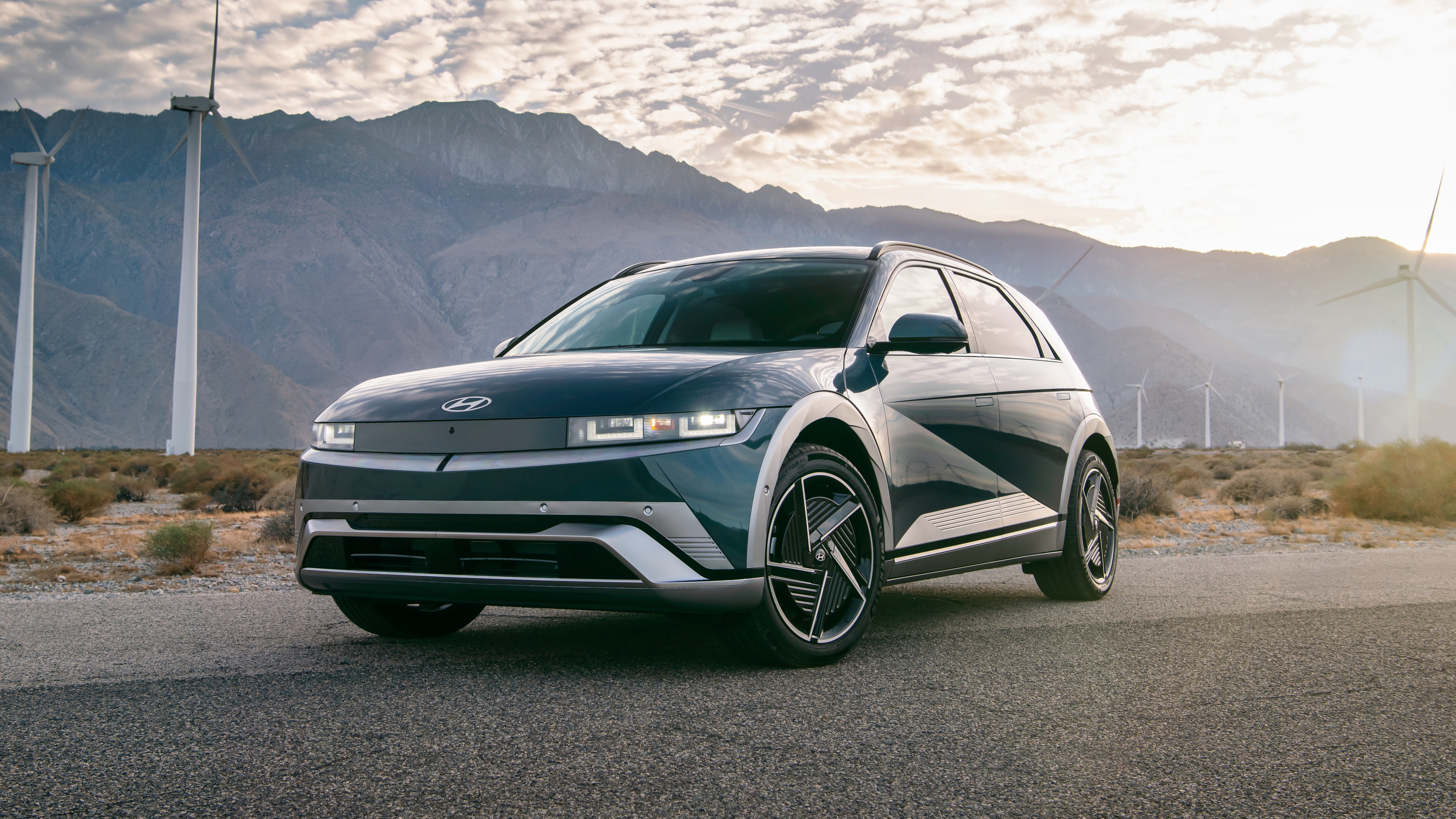
Let me be forthright, I’m not an evangelist for electric vehicles. It isn’t a political stance, nor is it a lament for the rhythm of an internal combustion engine. My reservations are practical and aesthetic as many EVs feel blob-like, ride like a soggy sponge, and invite range anxiety at every turn. Public charging is like a scavenger hunt, especially if you aren’t fortunate enough to have a home setup robust enough for Level 2 charging. And unless you own a Tesla and blessed with its charging network, finding a reliably functioning Level 3 station can be a test of patience, followed by a prolonged 12-hour charge time at a Level 2 charger just to gain a modest amount of range. In short, I have found EVs, despite their promise, frequently inconvenient and, frankly, a bit boring to drive. The 2025 Hyundai Ioniq 5, however, challenges that notion.
The 2025 refresh is gentle to the eye, so subtle that spotting the changes requires a keen eye or a very recent memory. The charging port has a sleeker profile, and Hyundai introduced an adaptor claimed to enable charging at Tesla Superchargers. Our experience with that adaptor was inconclusive, as it refused to cooperate during our test, leaving us to wonder what was misconfigured or misunderstood about the setup.
2025 also marks the Ioniq 5’s larger narrative with the arrival of two new variants; the Ioniq 5 N and the XRT off-road model. Both feel as though they’ve been tuned in from a video game, brimming with exaggerated character. Yet the most relevant reality for most shoppers remains the Limited trim, which previously sat atop the lineup but now sits just behind the XRT, starting at $45,075. The XRT opens at $46,275, while the Ioniq 5 N starts at a lofty $66,200. If you’re chasing the most adrenaline-pumped experience, the N is in a league of its own; for the daily user, the Limited offers a more balanced proposition.


On the road, the Ioniq 5 communicates a quiet practicality. It accelerates with purpose when you demand speed, but in everyday driving it feels unassuming, precisely what makes it approachable. The 0–60 time of 4.5 seconds in the all-wheel-drive dual-motor Limited trim is a useful reminder that speed is a feature, not a personality trait you must constantly bolt onto your daily narrative.
Highway comfort is where the Ioniq 5 shines. Large 20-inch wheels are more about style than impracticality, and the suspension maintains composure even when you push the chassis a touch. The overall handling feels confident and composed, with only caveat being that the electric steering seems tuned for comfort rather than sportiness. Engaging Sport mode doesn’t unleash a feral beast; it simply firmens the ride a touch, which may disappoint drivers seeking a more spirited edge. Then again that is what the N model is for.
The standout revelation here is charging performance. Hyundai’s 697-volt architecture paired with 350 kW DC fast charging moves the needle where it matters most by reducing downtime and enabling meaningful daily range. If you’re starting from a modest daily commute, the Ioniq 5’s real-world efficiency is compelling enough to forget the “how far can I go?” anxiety that plagues many EVs. In testing, the vehicle delivered over 300 miles on a single charge under typical conditions.
Inside, Hyundai trades the exterior drama for a cabin that emphasizes function without sacrificing clarity or comfort. The interior layout is open and airy, dominated by twin 12.3-inch displays that feel intuitive rather than gimmicky. A refreshed steering wheel design and redesigned center console place controls within easy reach, and the wireless charging pad has been made more accessible. Wireless Apple CarPlay and Android Auto are now standard, and the overall user experience in screen responsiveness, haptics, and infotainment flow feels more polished.


If you judge size by wheelbase, the Ioniq 5 is notable. At 118 inches in wheelbase dimension, it edges past Hyundai’s newest Palisade in length, resulting in a surprisingly spacious rear seat and doors that open with a sense of luxury-car invitation rather than compact-sedan practicality. The long wheelbase translates to generous interior room and a rear-seat experience that belies the vehicle’s exterior footprint.
Size and space aside, the Ioniq 5’s broader claim is its evolving place in the EV landscape. It represents a streamlined, practical evolution for drivers transitioning away from gasoline and toward an electrified future. It retains enough personality to be engaging, without demanding you to adopt a new identity as an EV devotee. The result is a vehicle that is likable not in spite of its practicality, but because of it isn’t chasing a dramatic image or an exaggerated persona; but rather delivering genuine, usable capability with a touch of finesse.


.

Leave a Reply