


When it comes to hybrid technology, it can be a tricky case to crack and nail down something that can achieve both above standard fuel economy while also providing better performance dynamics. Just look at where we’ve come with the Prius Hybrid… but also what we left behind with Nissan Hybrids. Hybrids aren’t for every automaker. For the case of the Hyundai Tucson Hybrid, we were left with mixed emotions.
Even though the new Tucson has been out now for over a year, this is our first go at it, so don’t mind us as we dive into the nitty gritty. The style is a bit out there with its origami structure, but Hyundai manages to make it work rather well in its propositions and uses its design to its advantage by encompassing things like the LED daytime lights into the grille. And as for Korean automakers go, at least it’s not as far out of this world as the Kia Sorento that doesn’t know what it wants to be yet; a spaceship or a crossover.


Inside, things are much calmer with a subtle contemporary scheme. There are attractive swoops in the curvature of the dash and the cascading center stack creates a clean minimalism design. Forgoing the use of a physical gear select lever does create a cleaner open console, but it does take some time getting used to the push button gear select – we can’t tell you how many times we went to push for Park and pushed Reverse instead. The interior space for a compact crossover is decently modest with room to shuffle about. Rear passenger space is decently comforting with plenty of knee and headroom and there is sufficient space in the trunk for your cargo needs.
There are three trim levels available on the Hybrid starting at $31,350. Our example arrived in a posh Limited starting at $39,110 that supported all the essentials of a premium crossover like leather power adjustable driver and passengers that’s where also heated & cooled, a massive panoramic sunroof, heated rear seats, a digital instrument cluster and the larger 12.3-inch touch screen display with 360-degree view camera and blind spot camera system.
On paper the Tuscon sounds like a sophisticated premium vehicle with all the right equipment to justify its price point. And we would tend to agree with that. However, our experience with Tucson had us feeling questionable…
For the most part, when we test cars, we can find a comfortable seating position rather quickly and are able to live with it until our weeklong duration is up – the Tucson on the other hand took a little more time to find a balanced livable position and even then, we still weren’t satisfied. The driver seat sits up high, giving a commanding view of the road; however, for taller drivers, the seat cannot go any lower due to the electric motors, so we were stuck rubbing our heads on the ceiling and trying to find a balance of sitting at an alert view while not slouching back for a nap. And whomever Hyundai hired to do their headrest design needs to be taken to a cornfield and left to their own demise – it’s the same headrests that are in the Genesis products and it’s the most uncomfortable design; it pushes your head forward and digs into your back.


And it’s not just the comforts… the technology aspect raises our eyebrows too. Standard on the Tucson, it uses an 8-inch touch screen that features buttons and knobs switches to control things like the radio and climate control, you know the old fashion way, just the way we like it; however, as seen here with our Limited Hybrid and its upgraded 12.3-inch display which despite its size, feels more like a downgrade than an upgrade. This larger display takes out physical controls and replaces them with touch-sensitive and while they worked just fine during our duration, history has shown that they can be a nuisance that will require multiple applications just to get the function to work. Furthermore, Hyundai uses two different software systems for the two different infotainment systems; thus the 12.3-inch display has no wireless Apple CarPlay or Android Auto connectivity and still requires a physical cord to operate. In theory this wouldn’t be such a big detail, but the 8-inch touch screen system has wireless supported software. Which brings us to this, Hyundai has yet to implement USB-c ports into their vehicles.
So, one would hope that the hybrid system could at least outweigh some of these ticky-tacky nitpicks. Possibly. Perhaps. But not really.
It does seem these days that engineers are trying to find different ways to optimize the most out of the hybrid powertrains. Honda went in a direction using a generator powered gas & electric combination system and, in the Hyundai Tucson, we find the use of a 1.6-liter turbocharged four-cylinder paired with an electric motor and an unconventional 6-speed automatic transmission in lieu of the usual CVT we see out there. This combo gives the Tuscon Hybrid a leg up with 226-combined horsepower over its gasoline only 2.5-liter 180-horsepower engine. And when it comes to laying down that power, the Hybrid gets a little more action as it can spring to 60-mph in about 7-seconds. That’s nearly 2-second less of your time from the standard gasoline engine.
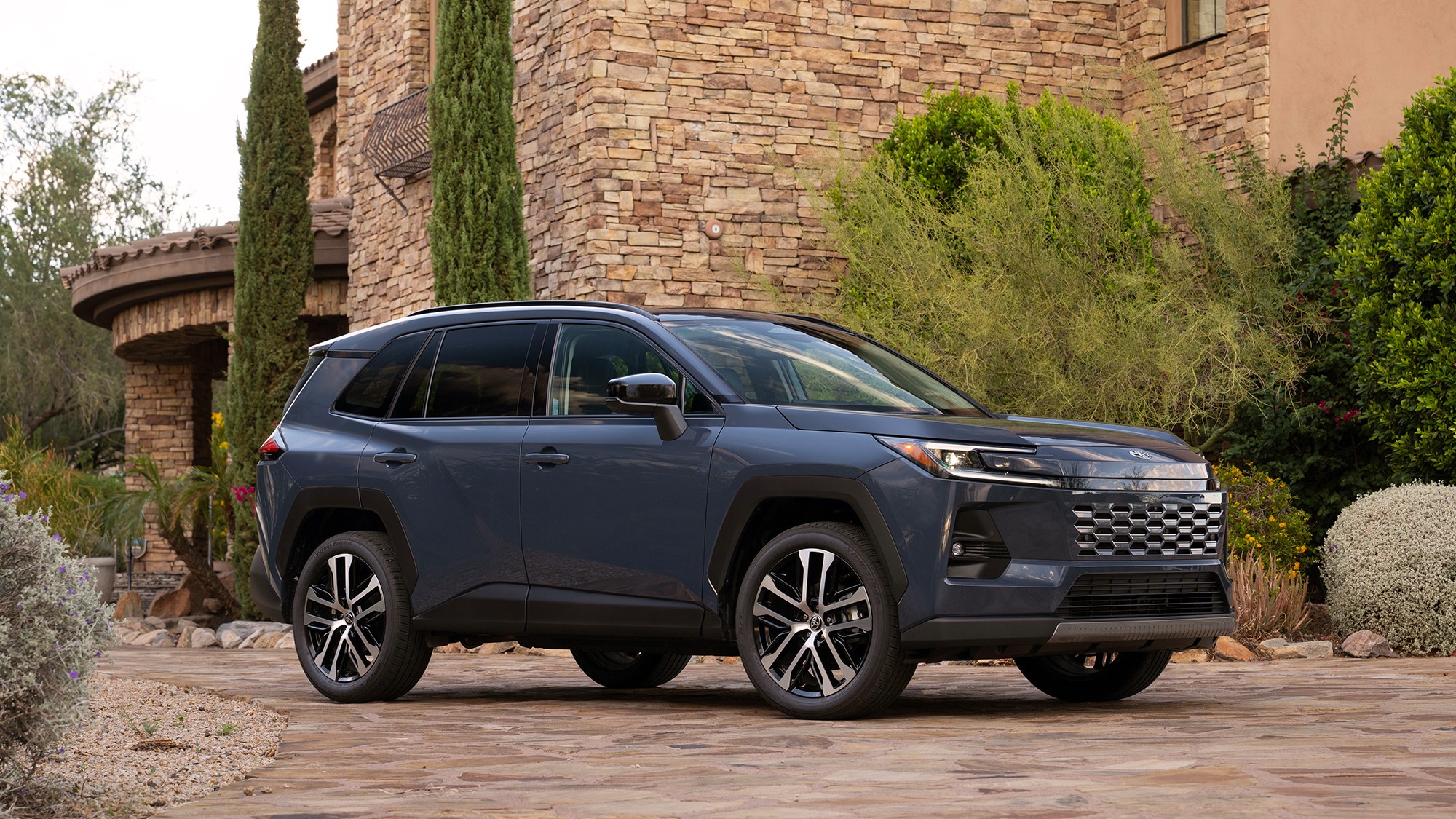
When it comes to fuel economy, this is where hybrid systems are supposed to shine; however, with the Tucson, it isn’t exactly its strong suit. EPA rates the fuel economy to be 36-mpg on the highway and 37-mpg combined with mixed driving. In the grand scheme, that is a big difference against the gasoline Tucson’s 24-city/29-highway mpg. But where it may outshine itself, it’s the competition it really needs to worry about. Compared the Toyota RAV4 Hybrid & Honda CR-V Hyrid, both can carry close to, if not over 40-mpg’s while our Tucson hybrid had a mere of 31.6-mpg’s combined.
In the realm of crossovers, it is a harsh, cruel environment and unfortunately, sometimes we must be a little tough. There is nothing wrong with being average, and the Tucson is great a being that average crossover. However, should you be interested in spending over $40,000 for a Hybrid Tucson, perhaps looking at the Plug-In Hybrid version that would get closer to that 40-mpg range with more performance attributes like 261-horsepower and 33-miles of electric range.

Leave a Reply