
While the previous third-generation Toyota Tacoma wasn’t exactly a disaster, it certainly ranked among the more disappointing chapters in automotive history. Using a decade-old platform and a slightly refreshed V-6, Toyota managed to fool consumers into believing the third-gen Tacoma was an all-new model. In reality, it was a little more than a mid-cycle refresh pretending to be something revolutionary. But the all-new fourth-generation Tacoma finally tells a different story—and it’s about time Toyota got it right.
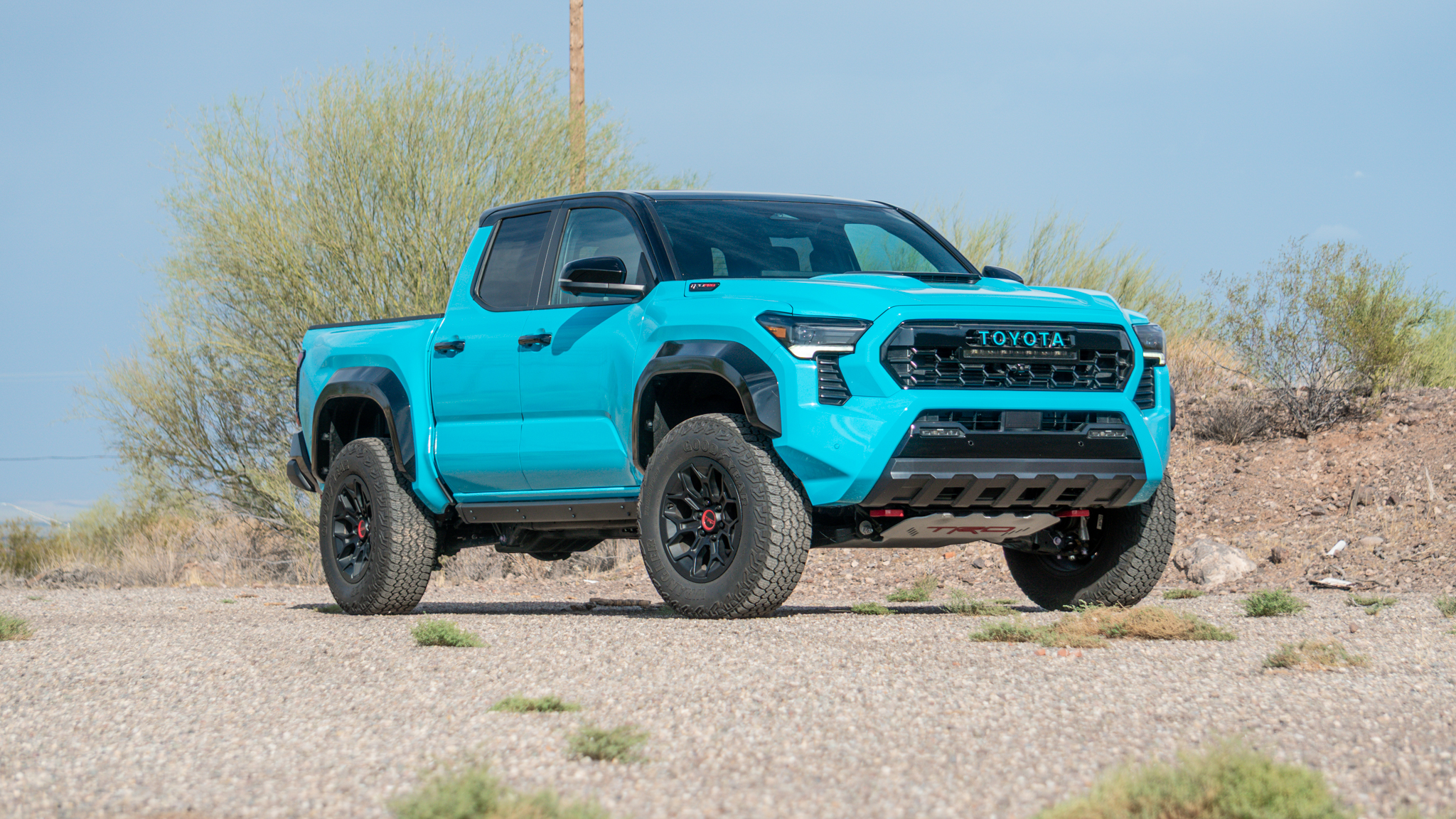
With a lineup as diverse as a Swiss Army knife, there truly is a Tacoma for everyone. The familiar names return: the SR and SR5, starting at a modest $31,590, serve as the dependable workhorses for the trades. The TRD-PreRunner, -Sport, and -Off-Road models continue their march with options like a six-speed manual transmission in the -Sport and -Off-Road trims. The Limited adds a touch of class, while the TRD Pro caters to those dreaming of overlanding adventures. And now, Toyota introduces the Trailhunter—a more subdued, off-road-focused variant of the TRD Pro, packed with more accessories than an overland expo, that is all covered under the manufacturer’s warranty.


In their latest effort to enhance performance without sacrificing efficiency, Toyota has ditched the archaic V-6 in favor of the new i-FORCE four-cylinder engine. Most of the lineup now comes standard with the turbocharged 2.4-liter four-cylinder, delivering a practical 278 horsepower and 317 lb-ft of torque. For those craving more, the i-FORCE MAX hybrid—an optional upgrade on the TRD Off-Road, Sport, and Limited—amps things up; however, the Trailhunter and TRD Pro models offer the beefier, 326-horsepower hybrid with 465 lb-ft of torque as standard.
We recently had the chance to test both engines at a Toyota media event. While the turbocharged four is perfectly adequate for the daily living, the hybrid MAX provides that extra boost of confidence—an unexpected, welcome punch. Paired with an eight-speed automatic and a 48-horsepower electric motor, the MAX hybrid is sports car quick. With our Trailhunter example being equipped with the desert air intake, we certainly enjoyed the turbo spool-up on acceleration and the fluttering blow-off valve when easing off the gas—an immature thrill we couldn’t resist performing every chance we got. The downside unfortunately, the air intake brings a constant hum of engine noise that can be a bit much. After a week, it was still livable, but I’d be curious to see how livable it is after six months or a year.


Since the Trailhunter is built for off-road adventures, daily driving remains surprisingly smooth. The suspension offers a composed ride, and the well-weighted steering provides decent handling—though some of the feedback feels a bit numb, as if the wheel is just going through the motions. And even with the larger tires, road noise is kept to a minimum.
Unfortunately, my time with the Trailhunter did not include any dirt trails; it remained an asphalt princess throughout—probably how most Trailhunter owners will spend their time. That said, for the sake of thoroughness, here’s a quick rundown of its off-road credentials: it’s equipped with “Old Man Emu forged monotube shocks with rear piggyback-style remote reservoirs”—whatever that means. It boasts a 35.7-degree approach angle and a 22.6-degree departure angle, thanks to higher-mounted bumpers, and even sports a rock rail—just in case things get a little too adventurous. The Trailhunter rolls on rugged 33-inch off-road tires and features all the typical Toyota off-road tech: Multi-Terrain Select drive modes, CRAWL control, a disconnect mechanism for the stabilizer bar, a locking rear differential, a 360-degree Multi-Terrain Monitor and pre-wired auxiliary switches for any aftermarket upgrades you might dream up.


Inside, the Tacoma is far from just an incremental upgrade over its predecessor. On lower trims, an 8-inch touchscreen comes standard, featuring wireless Apple CarPlay and Android Auto connectivity and a bigger 14-inch touchscreen is available and is standard on higher trims. Our test vehicle had the larger screen, which was impressively crystal clear. And thanks to Toyota’s latest software, it’s not only sharp but also incredibly intuitive to operate—because nobody likes to wrestle with a menu that requires going to YouTube University to figure out.
The interior of the Trailhunter feels like an exotic escape. Amber contrast stitching accents the cabin, giving it a refined and upscale vibe. The seats, a blend of cloth and leather, strike a nice balance between sportiness and premium, offering ventilated and heated functions. And they were plush, supportive, and we didn’t notice any long-term fatigue during our time behind the wheel. However, the same can’t be said for the rear seats—some Tacoma traditions remain unbroken, and rear passengers might wish for a bit more space or comfort.
The Trailhunter also comes packed with upgrades, like the JBL audio system, which includes a removable Bluetooth speaker—an unexpectedly feature that could be handy. The digital cluster display is customizable. There’s a wireless charging pad for your smartphone, power-adjustable seats for both driver and passenger, and—here’s the fun part—an onboard air compressor, blending off-road capability with convenience.
It’s encouraging to see Toyota finally hitting the mark with the Tacoma, transforming it into a serious contender against the new Ford Ranger and Chevrolet Colorado. Unfortunately, pricing has crept upward, and the sticker shock behind the Trailhunter is quite the eye-water-er. But, in the end, the size of the Tacoma may be small, but what it packs is a different story. At $64,230, the 2025 Tacoma Trailhunter is a substantial investment, but it’s also a whole lot of truck.



Leave a Reply